The Duct Cleaning System Improves Airflow
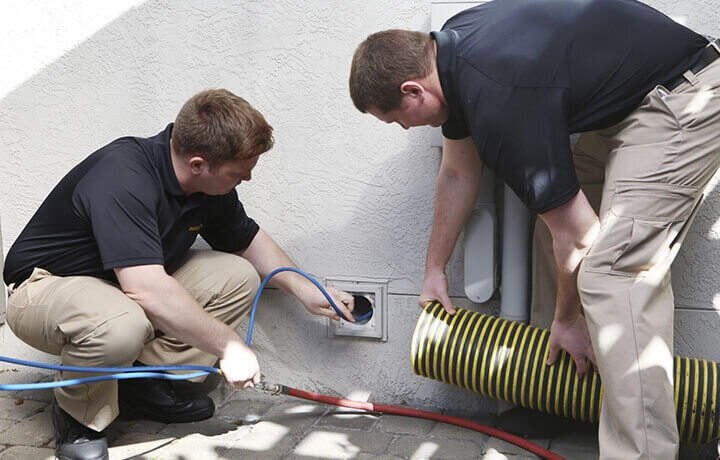
The Duct Cleaning System Improves Airflow
Adequately addressing air flow issues requires a professionally-conducted Flow Hood test to measure the volume of air that is pushed through your HVAC system and a complete duct inspection. There are many possible solutions, including:
- Air flow balance damper
- Enlarging some or all duct system runs
- A complete duct system redesign
One exception is if your recent remodeling or new construction project created lots of dust. You might consider having your ducts cleaned. But, once the ducts are cleaned and you are back on track, there should be no need to do it again.
Taking simple maintenance steps you can perform on your own not only saves you money in terms of continued HVAC operational efficiency, it avoids future costly repairs and the need to clean ducts periodically.
Is it more likely for Duct materials other than plain sheet metal to be contaminated with mold and other biological contaminants?
Air ducts made of sheet metal may sound familiar to you. However, many modern residential air duct systems are constructed of fiber glass duct board or sheet metal ducts that are lined on the inside with fiber glass duct liner. Flexible duct has seen a dramatic increase in use since the 1970s. It is usually internally lined with plastic, or another material.
Insulated ducts are now more popular because:
- To improve temperature control
- energy conservation
- Reduced condensation
Internal insulation offers better noise and acoustic control. Flexible duct has a very low price. These products are engineered specifically for use in ducts or as ducts themselves, and are tested in accordance with standards established by Underwriters Laboratories (UL), the American Society for Testing and Materials (ASTM), and the National Fire Protection Association (NFPA). Insulated ducts have been in use for many years and never had to face mold growth. Keeping them reasonably clean and dry is generally adequate. There is much debate over whether porous insulation materials, such as fiber glass, are more susceptible to microbial contamination that bare sheet metal. There may not be a significant difference between internally lined and bare-sheet metal ducts in terms of the extent or rate of mold growth if enough dirt or moisture is allowed to get into the system. However, treatment of mold contamination on bare sheet metal is much easier. Cleaning and treatment with an EPA-registered biocide are possible. Cleaning fiberglass duct liner once it has become contaminated by mold is insufficient to stop regrowth. There are also no EPA-registered biologicalcides that can be used for treating porous duct material. All three NADCA, EPA and NAIMA recommend that wet or moldy fiberglass duct material be replaced.